 Why Thanksgiving Is Stressful for Dogs: Multiple Stressors Combined
Thanksgiving brings convergence of multiple stressors simultaneously. Your house fills with strangers. The routine changes completely. The kitchen is chaotic with unusual smells and activity. Food—tempting, dangerous food—is everywhere. Your dog has no control over any of it, and the stress from one trigger amplifies sensitivity to the others.
A dog who normally handles guests okay might panic with three extra guests plus unusual kitchen chaos. A dog fine with routine disruption might struggle when routine changes combine with constant doorbell ringing and unpredictable interactions. Thanksgiving stress is cumulative—each stressor multiplies the anxiety from the others.
Physical signs appear within hours: panting, pacing, whining, excessive drooling, loss of appetite, or digestive upset. Some dogs become destructive or aggressive when overwhelmed. Others shut down and hide. All are signs your dog is stressed.
The good news: with advance planning and training, most dogs handle Thanksgiving significantly better. A dog trained for guest interaction and with a prepared safe space can enjoy the holiday alongside your family.
Identifying Your Dog’s Specific Triggers: Planning Ahead
Not every dog finds the same aspects of Thanksgiving stressful. Understanding your dog’s specific triggers helps you prepare targeted solutions.
Visitor anxiety: Does your dog struggle when strangers arrive? With multiple guests coming and going all day, this becomes a constant trigger. If your dog has even mild guest anxiety, Thanksgiving magnifies it.
Doorbell sensitivity: If your dog panics or lunges at the doorbell, repeated ringing (guests arriving throughout the day) creates continuous stress spikes. A dog who’s okay with the doorbell once might become increasingly reactive with each repetition.
Chaos sensitivity: Some dogs shut down when there’s too much activity, noise, and unpredictability. Thanksgiving kitchens are loud, chaotic, and unpredictable. A dog fine with normal activity might become anxious with hours of continuous commotion.
Food anxiety: Scavenging, resource guarding, or obsession with table food becomes a problem when the kitchen is full of tempting items. A dog who normally ignores your food suddenly becomes obsessed when turkey, stuffing, and desserts surround them.
Change in routine: Thanksgiving disrupts normal feeding times, walk times, and interaction patterns. A dog sensitive to routine disruption shows anxiety when their day changes dramatically.
Most dogs experience some combination of these. Identifying which affect your dog helps you prioritize training and management.
Training Your Dog for Guest Interactions: Gradual Exposure
If your dog shows guest anxiety, start desensitization weeks before Thanksgiving. The goal isn’t forcing your dog to love guests—it’s training them to remain calm during guest visits.
Week 1-2: Single visitor practice Invite one trusted friend over. Have them ring the doorbell while you reward your dog’s calm behavior. Gradually increase the friend’s interaction: sitting near your dog, offering treats, petting. Repeat with the same person multiple times so your dog’s anxiety decreases with familiarity.
Week 2-3: Multiple visitor exposure Invite different friends, one at a time, with the same desensitization process. Your dog learns “multiple people visit = each one is okay.”
Week 3-4: Simultaneous visitors Have two trusted friends visit at once. This is closer to Thanksgiving reality. Practice calm behavior around multiple people present simultaneously.
Week 4+: Varying visitor types Introduce variation: tall people, children, people with glasses, people with unusual appearances. The goal is your dog learning “different types of people = still okay.”
This process takes weeks, not days. Starting early—in September for November Thanksgiving—gives adequate time for meaningful anxiety reduction.
Managing Thanksgiving Food: Prevention and Safety
Thanksgiving tables contain multiple foods dangerous to dogs: chocolate, grapes, onions, garlic, fatty meats, xylitol, and more. Beyond toxicity, table scraps upset digestion and create obesity risk.
Prevention through management: Keep your dog away from the table and kitchen during meal preparation and eating. Use baby gates to confine your dog to another room, or set up your dog in a crate or safe space away from food chaos.
Brief your guests: Tell visiting family explicitly: “Please don’t feed the dog. Any table food can upset their stomach.” Many bites of “special Thanksgiving treats” from different guests cause serious digestive upset.
Provide safe alternatives: Give your dog their own special meal at the time your family eats. Turkey (plain, unseasoned, skinless) and pumpkin are safe options that feel special. Your dog has their own “Thanksgiving meal” separate from the table.
Manage scavenging opportunities: After meals, immediately clear the table and clean up spills. A dog who successfully scavenges once will persistently try again. Prevention is far easier than training the scavenging behavior away.
Watch for digestive upset: Some dogs get diarrhea or vomiting from unusual foods even in small amounts. If your dog has a sensitive stomach, extra vigilance about preventing table food access is critical.
The Thanksgiving Safe Room: Where Your Dog Can Escape Chaos
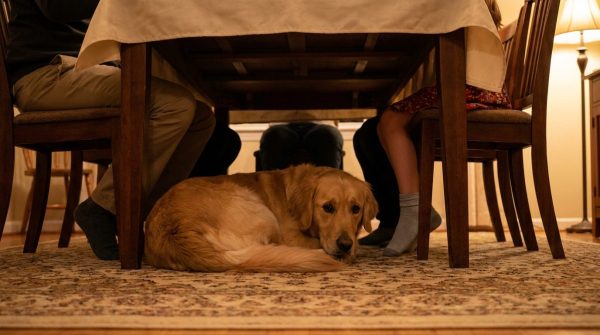
Even with training and management, many dogs need a refuge during Thanksgiving. A safe space allows your dog to escape overwhelming stimulation.
Choose an interior room: A bedroom or bathroom away from the main action, preferably not with windows facing where guests are. This is your dog’s retreat.
Set it up days in advance: Your dog should already be comfortable in this room. Practice using it during calm times so it feels like a positive space, not punishment.
Include comfort items: Bed, crate (if crate-trained), water, and toys. Puzzle toys and long-lasting chews occupy your dog mentally during the retreat time.
Use sound management: Close doors, run a fan or white noise machine to mask guest noise and activity. Some dogs benefit from dog-calming music or white noise apps.
Make it optional, not mandatory: Your dog can retreat to the safe room on their own if overwhelmed, or you can guide them there if anxiety escalates. The point is providing the option, not forcing confinement.
Allow supervised interaction: If your dog wants to socialize after adequate retreat time, allow it. The safe space should be available, not obligatory.
Doorbell Training and Arrival Management
With multiple guests arriving throughout the day, doorbell sensitivity becomes a major Thanksgiving issue.
Desensitize before Thanksgiving: Practice doorbell training starting in September. Ring the bell, reward calm behavior. Repeat dozens of times. Many dogs reduce their reaction significantly with extensive exposure before the actual holiday.
Have a guest-greeting protocol: Establish a routine for when guests arrive. Perhaps your dog waits in another room while guests enter, then joins the group once settled. Or your dog greets guests in a controlled way (on a leash, in a specific area) rather than having chaotic greeting at the door. Consistency in protocol reduces anxiety.
Manage door access: During arrival peaks, have your dog in the safe room or behind a gate away from the entry. This prevents door-dashing, chaos, and repeated doorbell-triggered anxiety spikes.
Professional Support During the Holiday: Virtual Training
If your dog shows serious Thanksgiving anxiety despite your preparation efforts, Virtual Training provides real-time professional support during the holiday itself.
A trainer can:
Observe your dog’s behavior during the actual holiday and give real-time guidance on management adjustments. If your dog is escalating, the trainer can suggest immediate interventions.
Coach guests on how to interact with your anxious dog—what to avoid, how to offer treats safely, when to give your dog space.
Provide midday check-ins to assess how your dog is handling the day and adjust your management as needed.
Help you know when to retreat. If your dog reaches a stress point where continuing guest interaction will cause lasting anxiety, a trainer helps you recognize it and know when to move your dog to the safe space.
After Thanksgiving: Getting Your Dog Back to Normal
After a stressful Thanksgiving, your dog may remain anxious for a few days. Calm, consistent routine helps them reset.
Return to normal schedule immediately: Get back to regular feeding times, walk times, and activity patterns. Routine stability signals to your dog that chaos is over.
Avoid further major disruptions: If you have guests staying or more holiday parties immediately after, your dog hasn’t fully recovered. Space holiday events apart when possible to allow nervous-system recovery between events.
Increase calm interaction: Provide extra low-key attention—quiet time together, gentle play, calm walks. This helps your dog feel safe again.
Monitor for lingering behavior changes: Some anxious dogs show behavior setbacks for a week or more after stressful events. Excessive vigilance, avoidance behaviors, or new anxiety around triggers (doorbell, guests) might appear temporarily. These usually resolve with time and returning to routine, but if they persist, professional training helps.
Frequently Asked Questions About Thanksgiving Anxiety
Should I feed my dog plain turkey on Thanksgiving?
Yes, plain turkey (no skin, no seasoning, no bones) is safe and can be a nice Thanksgiving treat for your dog. Make sure it’s unseasoned—Thanksgiving turkey is often brined, salted, or seasoned heavily, which isn’t appropriate for dogs. If you want to share turkey with your dog, cook a separate plain piece without any additives.
What foods are dangerous that guests might sneak to my dog?
The most dangerous Thanksgiving foods include onions and garlic (toxic), grapes and raisins (toxic), chocolate (toxic), xylitol in sugar-free items (toxic), fatty foods (cause pancreatitis), and bones (cause blockages/splinters). Also avoid stuffing with garlic/onions, cranberry sauce with grapes, and desserts with chocolate or xylitol. Politely but firmly ask guests not to feed your dog, and explain why.
My dog ate something at Thanksgiving that might be toxic. What do I do?
Contact your vet or the ASPCA Animal Poison Control Center immediately. Have information ready: what your dog ate, how much, when. Don’t wait to see if symptoms develop—some toxins cause delayed damage. Prompt veterinary contact can prevent serious illness.
Can I give my dog medication to calm them through Thanksgiving?
Short-term anti-anxiety medication (prescribed by your vet) can help severe anxiety, but it works best paired with training and management. Medication alone doesn’t teach your dog that Thanksgiving is safe—it just lowers their stress response temporarily. Talk to your vet about options if your dog’s anxiety is severe.
Should I hide my dog away in a room the entire Thanksgiving?
Hiding your dog away defeats the purpose of family gatherings and prevents them from ever getting comfortable around guests and activity. Instead, use a safe room as a retreat option, not a permanent confinement. Your goal is your dog being present-but-calm, not absent-but-unstressed.
What if my dog gets sick from Thanksgiving food despite my precautions?
Minor digestive upset (mild diarrhea, decreased appetite for a day) often resolves on its own with bland diet (boiled chicken and rice). However, vomiting, severe diarrhea, lethargy, or abdominal pain warrant a vet call. Some Thanksgiving foods cause serious issues requiring medical care. It’s always better to err on the side of calling your vet.
Make This Thanksgiving Calm for Your Dog
Thanksgiving doesn’t have to mean stress, anxiety, or behavior problems. With proper training and management, your dog can enjoy the holiday safely while you enjoy your family.
Virtual Training provides professional support both before Thanksgiving (through desensitization training) and during the holiday (real-time coaching and guest management).
Behavior Modification training addresses guest anxiety, doorbell sensitivity, or food obsession issues before the holiday arrives.
Guest Management Training specifically teaches dogs to remain calm and well-behaved during visitor interactions.
Contact Dog Busters now to plan your Thanksgiving strategy. Your dog’s calm, safe holiday starts with professional training and preparation.
Sources & Further Reading
- ASPCA. (2024). “Thanksgiving Safety for Dogs: Food and Stress Management.” Retrieved from ASPCA.org
- Canine Behavior Research. (2024). “Visitor-Related Stress and Anxiety in Dogs During Holiday Gatherings.” Retrieved from behavioral research journals
- American Kennel Club. (2024). “Holiday Pet Safety and Stress Prevention.” Retrieved from AKC.org