
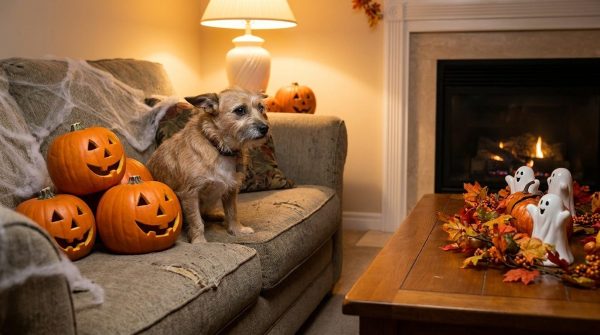
 Understanding Halloween Anxiety: Sensory Overload and Unpredictability
October 31st looks like chaos to your dog. The house is decorated differently. Strangers show up at the door in masks and costumes. Doorbells ring constantly. The night is full of loud, uncontrolled sounds—fireworks, screaming trick-or-treaters, and things your dog has never experienced before.
Halloween creates perfect conditions for anxiety in sensitive dogs: unpredictability (you don’t know when the doorbell will ring), sensory overload (unfamiliar sights, sounds, smells), and loss of control (your dog can’t prevent the intrusions). For many dogs, Halloween is the most stressful day of the year outside of Fourth of July.
Physical signs of Halloween anxiety include pacing, trembling, panting, whining, destructiveness, excessive drooling, or hiding. Some dogs become aggressive due to fear. Others shut down completely. All of these are signs your dog is overwhelmed.
The good news: you can substantially reduce Halloween anxiety with advance training and environmental management. Dogs trained for Halloween calm down during the holiday while untrained dogs often spiral into panic.
Breaking Down Halloween: Four Major Stress Triggers
Decorations and environmental changes cause anxiety in dogs with sensitivity to their home environment. Pumpkins, skeletons, lights, and cobwebs change the familiar space into something unrecognizable. Some dogs become hyper-vigilant, searching for the “danger” in these new objects. Others hide, feeling unsafe in their own home.
Constant doorbell ringing is one of the worst Halloween triggers. For a dog not trained to handle door arrivals, the doorbell becomes a constant surprise attack. The door opens, strangers enter or approach, chaos ensues. For a dog that already has fear issues with strangers or the doorbell, Halloween turns their home into a nightmare.
Trick-or-treaters in costumes trigger fear in ways normal visitors don’t. A person in a full mask, with altered voice, moving strangely—this isn’t a normal human to your dog. The costume is designed to be surprising and unfamiliar. For a fearful dog, this reads as threatening.
Outdoor sounds and chaos from the neighborhood—screaming children, firecrackers, party noises—create an unpredictable sound environment. Even inside the house, your dog hears things they can’t identify and can’t predict. This unpredictability itself is anxiety-inducing for many dogs.
Gradual Preparation: Training Your Dog for Halloween (Starting Now)
Effective Halloween training starts weeks in advance, not days before. You’re building tolerance for specific stressors through gradual exposure.
Week 1-2: Decoration desensitization Gradually introduce Halloween decorations into your home. Start with non-scary items: a pumpkin in the corner, Halloween-themed treats or toys. Let your dog investigate calmly. Add small decorations gradually—lights, fall garlands, simple pumpkin displays. Reward your dog for calm behavior around these items.
Week 2-3: Doorbell training Ring the doorbell and immediately reward your dog. The goal is changing their response: doorbell = good things happen, not “intruder alert.” Start quiet and gradually increase volume. Have a family member ring the bell from outside while you reward your dog inside. Practice multiple times weekly. By late October, the real doorbell shouldn’t be as startling.
Week 3-4: Stranger/costume exposure Ask friends to visit, first unmasked, then wearing partial costumes (hat, scarf, sunglasses). Reward your dog for calm interaction. Gradually progress to fuller costumes, masks, and altered voices. The goal is teaching your dog “people in different appearances are not threats.”
Week 4-5: Sound desensitization Play recordings of Halloween sounds: screaming children, firecrackers, crowd noise. Start at very low volume while your dog is doing something pleasant (eating a meal, playing). Gradually increase volume over multiple sessions. This desensitizes your dog to the actual sound they’ll hear.
If You’re Dressing Your Dog: Managing Costume Anxiety
Some owners want to dress their dogs in Halloween costumes. This adds another layer of anxiety for dogs not conditioned to wearing unusual items.
If you plan to costume your dog:
Start weeks early. Don’t wait until Halloween. Start with simple items: a bandana, a collar, a loose fabric piece. Let your dog wear it for 30 seconds while rewarded, then remove it. Repeat daily, gradually increasing wear time.
Progress to costume components. Add a vest, then fuller costume pieces. Each addition gets the same process: wear briefly, reward, remove. Never force a costume on a scared dog.
Practice movement. Once your dog tolerates costume wear, practice walking, sitting, and normal behavior while costumed. Many dogs feel restricted or strange in costumes and need adjustment time.
Plan for Halloween specifically. If your dog shows any anxiety about costume wear after weeks of practice, don’t costume them on Halloween. The holiday is stressful enough without adding costume anxiety on top.
Realistically, most dogs don’t need costumes. Your dog’s comfort is more important than a cute photo. Skip the costume if your dog shows hesitation.
The Safe Room: Your Dog’s Refuge During Halloween Chaos
Even with training, many dogs need a safe retreat during Halloween. This isn’t failure—it’s smart management that prevents anxiety escalation.
Choose a quiet interior room. Not a basement or garage where they feel isolated, but an internal room with minimal outside-facing windows. A bedroom or bathroom works well. This room should be familiar territory where your dog already feels comfortable.
Make it comfortable. Include your dog’s bed, crate (if crate-trained), water bowl, and comfort items. The room should feel like a safe nest, not a punishment space.
Provide enrichment. Long-lasting chews, puzzle toys, frozen Kongs—things that occupy your dog mentally during the chaos outside. A dog actively chewing is less likely to panic.
Use sound management. Close windows. Run a white noise machine or fan to mask outside sounds. Some dogs benefit from dog-specific calming music or white noise apps designed to reduce anxiety.
Never force your dog into the room. Practice using it during quiet times so your dog sees it as a positive space, not a punishment. Then, during Halloween, your dog can retreat there on their own or you can quietly guide them there if anxiety escalates.
Use this strategically. You don’t have to lock your dog away all evening. If training has been successful, your dog might handle some trick-or-treating time out. If anxiety escalates, guide them to their safe space. The option should be available, not mandatory.
Practical Solutions for Door Traffic
The trick-or-treating hour creates constant door activity. Here are strategies to keep your dog and visitors safe.
Keep your dog away from the door entirely. Use baby gates or closed doors to prevent your dog from greeting trick-or-treaters. Even a friendly dog creates chaos when they’re in the entryway while you’re distributing candy.
Use a back door for handing out candy. If you have access to a side or back entrance, use that instead of the main door. This eliminates your dog seeing constant strangers entering.
Have a non-anxious family member manage your dog. While you’re handing out candy, another family member keeps your dog in the safe room or away from the action. They’re not responsible for both managing a scared dog and greeting visitors.
Consider skipping trick-or-treating. It’s okay to not participate. Turn off your porch light, don’t answer the door, and spend a calm Halloween with your dog. This eliminates the entire source of stress.
Partner with neighbors. If you want to participate but your dog is anxious, ask a trusted neighbor to watch your dog during trick-or-treating hours. Your dog spends a calm evening elsewhere while you enjoy the holiday.
When to Bring in a Professional for Halloween Training
If your dog shows serious Halloween anxiety—not just nervousness but panic-level fear—Virtual Training provides professional support.
A trainer can:
Assess anxiety severity and recommend whether desensitization or environmental management is the best approach for your dog.
Guide you through desensitization protocols specific to your dog’s triggers, with real-time feedback as you practice doorbell training, costume exposure, or sound desensitization.
Create a Halloween safety plan that combines training progress with appropriate management based on your dog’s current anxiety level.
Address anxiety that appears during training and adjust the plan if your dog shows escalation instead of improvement.
Professional guidance ensures you’re training at the right pace and prevents accidentally worsening your dog’s anxiety.
Preventing Long-Term Halloween Anxiety
If you invest in Halloween training this year, maintaining that progress prevents your dog from developing anxiety again next year.
Occasional reinforcement: A few times monthly, ring the doorbell and reward your dog’s calm response. Have friends visit in different appearances. Play Halloween sounds briefly at low volume. This prevents the training from fading.
Start training earlier next year: If your dog made good progress but remained somewhat anxious, starting desensitization in August next year gives more time for comfort to develop.
Recognize anxiety patterns: If certain triggers (costumes, specific sounds) caused more anxiety than others, focus desensitization there next year before the season starts.
Frequently Asked Questions About Halloween Anxiety
Is Halloween anxiety normal, or is my dog abnormally sensitive?
Halloween anxiety is extremely common. The holiday creates unusual sensory input that most dogs find stressful. Some dogs handle it better than others, but many dogs experience some level of anxiety. It’s not a sign your dog is broken—it’s a normal response to an unusual situation. Training addresses it effectively.
Can I medicate my dog through Halloween?
Short-term anxiety medication can help, but it works best paired with training. Medication lowers your dog’s baseline arousal, allowing them to be calm enough to process new experiences. Medication alone doesn’t teach your dog that Halloween isn’t threatening. Talk to your vet about options if your dog’s anxiety is severe.
Should I take my dog to Halloween parties or trick-or-treating with me?
Only if your dog is comfortable with crowds, costumes, and chaos. Most anxious dogs should stay home in a safe space. A calm evening home is far better for your dog than forcing them into a stressful party environment “to socialize.”
My dog is normally friendly but aggressive during Halloween. Why?
Fear can trigger defensive aggression even in friendly dogs. When a dog feels threatened (which masked strangers may represent to them), they may snap or bark aggressively. This isn’t a change in personality—it’s fear-based defense. It typically resolves when Halloween anxiety decreases through training.
How far in advance should I start Halloween training?
Ideally, start 6-8 weeks before Halloween (August or early September). This gives time for gradual desensitization. If you’re reading this late and Halloween is soon, start immediately—even 2-3 weeks of training helps. If Halloween has already passed, start training now for next year.
What if I’ve already decorated, and my dog is terrified?
Remove or relocate the most scary decorations temporarily. Some decorations you can keep (your dog can adjust), while others (moving skeletons, scary masks) might be worth storing for this year. Next year, introduce them more gradually. Your dog’s comfort this Halloween is more important than decoration aesthetics.
Start Halloween Training Now—Don’t Wait Until October
Halloween anxiety can be significantly reduced or eliminated with proper training and preparation. Beginning now ensures your dog handles the holiday calmly instead of spending it in fear.
Behavior Modification training addresses the specific fears driving your dog’s Halloween anxiety—whether it’s doorbell sensitivity, fear of strangers, or noise anxiety.
Virtual Training provides professional coaching week-by-week through your desensitization training, with real-time feedback on your dog’s progress.
Fearful Dogs programs specifically address fear-based reactions to strangers and unfamiliar situations, directly targeting Halloween triggers.
Contact Dog Busters today to create your Halloween training plan. Your dog can have a calm, safe Halloween—let’s make it happen.
Sources & Further Reading
- ASPCA. (2024). “Holiday Stress and Anxiety in Pets.” Retrieved from ASPCA.org
- American Kennel Club. (2024). “Helping Your Dog Handle Holidays and Special Events.” Retrieved from AKC.org
- Canine Behavioral Research. (2024). “Seasonal Anxiety Patterns and Environmental Triggers.” Retrieved from behavioral research journals