
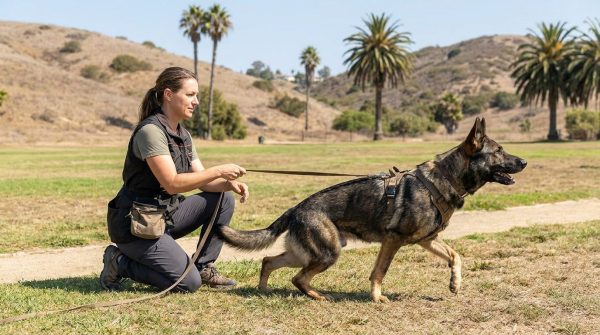
 Aggression Isn’t a Personality Flaw—It’s a Treatable Behavioral Problem
Your dog snaps at guests. They growl over food. They lunge at other dogs on walks. You’ve probably heard suggestions to rehome them, that they’re “just aggressive” or “dangerous.” These responses come from fear and misunderstanding—but they’re not inevitable conclusions.
Aggression is a learned behavioral response, not a character trait. Dogs don’t wake up deciding to be aggressive. They develop aggressive behaviors because those behaviors have worked for them in the past. Understanding this distinction changes everything about how you approach treatment.
The scientific evidence is clear: with proper behavior modification training, the vast majority of aggression cases improve dramatically. Some dogs become completely non-aggressive. Others learn to manage their impulses. Either way, professional training transforms dangerous situations into manageable ones.
This article walks you through what drives aggression, how to recognize warning signs before a bite occurs, and why professional intervention works where punishment fails.
Why Dogs Become Aggressive: The Root Causes
Aggression stems from a few core motivations. Identifying which type your dog displays helps shape the right training approach.
Fear-Based Aggression is the most common type. A dog who is afraid or anxious may bite as a defense mechanism—a preemptive strike to make the threat go away. Fear aggression typically shows warning signs: the dog backs away, shows a tucked tail, or gives a wide berth before snapping. They’re not looking for a fight; they’re trying to create distance. Classic triggers include handling by strangers, vet visits, loud noises, or unfamiliar dogs approaching too closely.
Fear aggression is highly trainable because the underlying issue is anxiety. When you reduce the anxiety, the aggression fades. This is where desensitization training shines.
Resource Guarding Aggression occurs when a dog feels their valuable resources are being taken away. Food, toys, favorite resting spots, or even their owner’s attention can trigger this response. The dog growls, snaps, or lunges when the resource is approached or threatened. Unlike fear aggression, resource guards often display no warning—they simply bite when they perceive a threat to their possession.
Resource guarding is instinctively rooted in survival, but it’s completely trainable. Dogs learn to relinquish items and share space through proper conditioning. Professional training reshapes their emotional response to having their items approached.
Territorial Aggression emerges when a dog feels their territory—home, yard, car, or even their handler—is being invaded. They bark, lunge, or snap at perceived intruders. Some territorial aggression is situational (only happens at home), while others is more pervasive (any stranger in any space). Triggers include visitors arriving, neighbors passing by, or other dogs in the yard.
Territorial aggression responds well to training because it’s largely habitual. Dogs learn through repetition what responses work. Changing that habit pattern through exposure and reward redirection works effectively.
Most dogs display combinations of these types, especially when stressed. A fearful, resource-guarding dog who also shows territorial tendencies requires a layered training approach addressing all three.
Warning Signs: The Escalation Ladder Before a Bite
Dogs communicate clearly before they bite. Most bites are preventable if you understand the escalation ladder. Each step gives you a chance to intervene.
Level 1: Stiff body language The dog’s entire frame tightens. Muscles tense, posture straightens, and movement becomes rigid rather than fluid. Their face may look “hard”—no soft eye contact, no facial relaxation. This is the earliest warning sign.
Level 2: Direct stare A prolonged, intense stare without blinking. In dog language, this is confrontational. A dog making direct eye contact (especially combined with stiff posture) is escalating.
Level 3: Raised hair (hackles) The hair along the dog’s spine stands up. This signals extreme arousal and is often paired with other warning signs.
Level 4: Growling and baring teeth The dog is now vocalizing their displeasure. Growling is a gift—it’s communication before biting. Dogs that growl often don’t bite, because they’ve warned you. Dogs that skip directly to biting usually had warning signs you missed.
Level 5: Snapping The dog’s mouth closes on nothing or air as a warning snap. This is a very serious level. The dog is done communicating and demonstrating what they will do if the threat continues. A snap is a promise of a bite.
Level 6: Bite Full contact with teeth. Severity varies from a light bite (called a “bite inhibition” or “soft bite”) to severe, damaging bites.
The key to preventing bites is intervening at levels 1-3, when the dog is still thinking rather than reacting. Once you recognize the escalation ladder, you can remove your dog from triggering situations before they reach the growling stage.
Additionally, dogs often show context-specific warnings. Before food aggression emerges, they may stiffen when you approach their bowl. Before guest aggression, they show stiffness when someone enters the door. Learning your individual dog’s earliest warning signs is critical safety work.
How Professional Training Rewires Aggressive Responses
Punishment-based approaches to aggression are ineffective and dangerous. They increase fear, which increases aggression—a vicious cycle that often ends in tragedy. Professional behavior modification takes a different path.
Desensitization works by gradually exposing your dog to the triggering situation at a low intensity while rewarding calm behavior. The goal is changing their emotional response to the trigger itself.
For fear-based aggression: If your dog snaps at strangers, training involves bringing in trusted people at distances where your dog isn’t afraid. That distance might be 30 feet away. Your dog sees the person, stays calm, and gets rewarded. Over dozens of sessions, that distance closes. Eventually, the person can hand-feed treats. The dog’s brain rewires: “Strangers approach = good things happen to me” instead of “Strangers approach = I need to defend myself.”
For resource guarding: Training involves approaching the resource with the dog at a distance, then retreating. Repeat hundreds of times. Then you approach closer, then you touch the bowl, then you walk by with treats. The dog learns: “Someone near my food = even better food comes” instead of “Someone near my food = I must attack.”
For territorial aggression: Training involves controlled exposure to triggers (visitors, other dogs in yard) at controlled intensities, with clear rewards for calm behavior. Your dog learns that the presence of triggers doesn’t require aggression to keep their territory safe.
This process is not quick. A single aggression case typically requires 6-12 weeks of consistent training. Complex cases involving multiple trigger types may take 3-6 months. But the results are lasting because they’re based on changing the dog’s emotional response, not suppressing behavior through fear or punishment.
The Benefits of Training in Your Home Environment
Professional training can happen in two main settings: in-home training where a trainer comes to you, or facility training (Board & Train) where your dog stays elsewhere. Both work, but in-home training has unique advantages for aggression cases.
Real environment work: Aggression is context-dependent. A dog’s behavior with strangers at a facility is different from their behavior with strangers entering their home. In-home training addresses the exact situations causing problems, not theoretical ones.
Owner education: The handlers of the dog (you and your family) are the ones present during training. You’re learning how to recognize warning signs, how to manage situations, how to reward calmly, and how to prevent regression. This knowledge transfer is crucial for long-term success.
Generalization: Dogs trained in one environment don’t always transfer those skills to other spaces. Training in the actual problem location ensures the skills stick where you need them most.
Safer learning curves: A professional trainer in your home can manage real-life scenarios—actual visitors, actual guests, actual triggers—with expert supervision. This is safer and more effective than trying to recreate these situations in a sterile facility.
Virtual Training combines the best of both approaches: a professional guides you in real-time through actual situations in your home, providing feedback and adjustments as they observe your dog’s responses.
Keeping Everyone Safe While Training Takes Effect
Behavior change takes time. While training is progressing, you must actively manage to prevent rehearsal of aggressive behavior and ensure safety for your dog, your family, and others.
Environmental management: If your dog is guest-aggressive, don’t invite guests over during training. If they’re leash-reactive, avoid walking routes with triggers. If they’re resource-aggressive, pick up toys, bones, and food immediately. You’re not hiding the problem—you’re preventing your dog from practicing aggression while retraining occurs.
Threshold management: Identify the distance or intensity at which your dog doesn’t show aggression. Work within that threshold. If your dog lunges at other dogs on walks, cross the street earlier. If they snap when strangers approach closer than 8 feet, manage that distance until training closes the gap.
Controlled exposures: All exposures to triggers should be intentional, planned, and supervised. Random exposures that trigger aggression reinforce aggressive behavior. Planned exposures with training protocols weaken it.
Medication as a bridge: Some trainers recommend short-term anti-anxiety medication to lower your dog’s arousal baseline while training progresses. This isn’t a forever solution but can accelerate learning in severe cases.
Liability awareness: During training, your dog is more likely than ever to bite if management fails. Ensure adequate fencing, leashing, and warning signs. Consult with your insurance and veterinarian about liability.
What to Expect From Professional Aggression Training
When you hire a professional to address aggression, clear communication about safety is essential. A responsible trainer will:
Conduct a thorough consultation: Before any training begins, they’ll ask detailed questions about trigger types, bite history, living situation, and goals. They’ll observe your dog’s behavior in various contexts. This assessment informs the entire plan.
Establish clear safety protocols: The trainer will define what is and isn’t safe during sessions. They may exclude certain family members, require specific management during training, or recommend muzzle training for safety during certain phases.
Manage liability transparently: Responsible trainers acknowledge that aggression training carries inherent risks. They’ll discuss insurance, waivers, and what happens if the dog escalates during training.
Build your competence: A good trainer doesn’t just train your dog—they train you to recognize warning signs, implement management, and execute training protocols. You should feel increasingly confident, not more dependent on the trainer.
Provide a realistic timeline: They won’t promise quick fixes. Legitimate aggression training requires 6+ weeks minimum. Anyone guaranteeing faster results is likely using punishment, which appears to work but creates underlying problems.
Realistic Expectations: Recovery and Relapse Prevention
Successfully treated aggression doesn’t mean your dog becomes a social butterfly. It means their aggressive responses diminish to manageable levels, and triggers no longer escalate into dangerous behavior.
Some dogs achieve 80-90% improvement. Others become essentially non-aggressive. A few maintain residual caution around specific triggers—for example, a fear-aggressive dog may always prefer smaller gatherings to large parties. This is not failure; it’s honoring your dog’s baseline personality while eliminating dangerous reactivity.
Aggression can relapse if management breaks down or if your dog experiences a triggering event (a scary incident, major change) that recreates the original problem. This is why ongoing management and maintenance training are important even after the acute training phase ends.
Post-training, many owners benefit from occasional refresher sessions or virtual coaching to address new triggers or refine management as their life changes.
Frequently Asked Questions About Aggression Training
Is my dog too aggressive to train?
Nearly all aggression is trainable unless there is a medical brain issue (extremely rare). The severity of current aggression doesn’t predict outcome—willingness to invest in proper training does. A dog with severe, multiple-trigger aggression requires intensive work, but improvement is absolutely possible.
How long until my dog stops showing aggression?
Meaningful improvement typically appears within 3-4 weeks of consistent training. Significant behavior change—where your dog reliably doesn’t show aggression in controlled situations—usually takes 8-12 weeks. Full, complete improvement may take 3-6 months. This varies by aggression type, severity, and consistency of practice.
Will my dog ever be safe around small children?
This depends on the type and severity of aggression and the dog’s individual temperament. Some aggressive dogs become perfectly safe around children. Others need permanent management—no unsupervised access, careful monitoring, clear boundaries with kids. Your trainer will help you understand what’s realistic for your specific dog.
Do aggressive dogs need to be muzzled forever?
Muzzle training is often a tool during the training phase, creating safety while behavior improves. Some dogs graduate off muzzles entirely as aggression fades. Others benefit from long-term muzzle use in specific contexts. A quality basket muzzle allows eating and drinking and is safe for extended wear. It’s a management tool, not a failure.
What about medication for aggression?
Some behavioral medications (SSRIs like fluoxetine) reduce baseline anxiety and aggression over weeks. They work best paired with training. Medication alone doesn’t fix aggression; it creates a neurochemical environment where learning happens more easily. Discuss options with your vet and trainer together.
Could rehoming be the better choice?
Rehoming an aggressive dog is complicated. Most aggressive dogs will show the same behavior patterns in new homes unless the underlying cause (fear, resource guarding, etc.) is addressed. Training at home gives your dog the best chance of keeping the family they know while improving behavior. Rehoming makes sense only if your family cannot safely manage during the training period.
Your Aggressive Dog Can Improve—Get Professional Help
Aggression is one of the most stressful behavioral issues a dog owner faces. Watching your dog escalate, worrying about accidents, managing constant vigilance—it’s exhausting. The good news is professional training changes this situation.
Virtual Training connects you with a professional who guides your dog’s behavior modification in real-time, in your home, during the exact situations causing problems.
Board & Train provides intensive training focused on behavior foundation and safety protocols in a controlled environment, perfect for severe cases or when family safety requires immediate intervention.
Behavior Modification programs are customized to your dog’s specific aggression type and triggers, addressing root causes rather than suppressing symptoms.
Contact Dog Busters today. Your dog’s aggression is treatable, and we can help you see improvement.
Sources & Further Reading
- American Veterinary Society of Animal Behavior (AVSAB). (2024). “Position Statements on Aggression in Dogs.” Retrieved from AVSABonline.org
- VCA Animal Hospitals. (2024). “Aggression in Dogs: Types, Causes, and Treatment.” Retrieved from VCAhospitals.com
- ASPCA. (2024). “Aggressive Behavior in Dogs: Prevention and Management.” Retrieved from ASPCA.org