
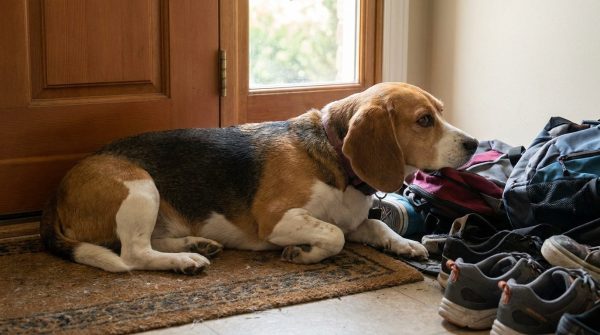
 Summer to School: Why the Routine Change Hits Dogs Hard
Summer has been perfect. Your dog had you around most days, regular walks at flexible times, and predictability. Then school starts. Suddenly, your home is empty from 7 AM to 3 PM. The routine your dog has relied on for months collapses overnight. This isn’t a minor inconvenience for your dog—it’s a major life disruption that often triggers anxiety.
Dogs thrive on routine. Their internal clock syncs with yours. When that rhythm breaks abruptly, many dogs experience panic, destructiveness, excessive vocalization, or house-soiling. Some develop separation anxiety for the first time. Others regress from previous anxiety training.
The good news: you can minimize or prevent back-to-school anxiety with advance planning and gradual training. Dogs that have time to adjust to new schedules handle transitions smoothly. The transition period matters far more than the final schedule.
Understanding the Difference: Two Types of Back-to-School Stress
Not all back-to-school anxiety looks the same. Understanding which type your dog experiences helps you choose the right training approach.
Separation Anxiety emerges when your dog panics at being alone, period. The problem isn’t the schedule—it’s the absence of their person (or people). Signs include destructiveness focused on doors/windows (trying to escape), relentless vocalization, elimination in the house despite being housetrained, excessive drooling, or self-injury. These dogs often show panic behaviors within minutes of their person leaving.
Separation anxiety is distinct from normal dog boredom or loneliness. It’s a genuine panic response with physical manifestations. A dog with separation anxiety might be perfectly calm during a normal workday once they’ve acclimated, but the panic during the transition phase is intense.
Schedule Anxiety is different. This dog doesn’t panic at solitude itself—they panic at the disrupted routine. They’re used to a 10 AM walk, lunch at noon, afternoon playtime, and dinner at 6 PM. Back-to-school changes that to walks before 7 AM and after 3 PM, with a long gap in between. The anxiety comes from “my routine is broken,” not “I’m alone.” These dogs often show restlessness, pacing, whining, or destructiveness specifically during times when the routine has changed, not constant panic.
Most dogs experience some blend of both. The distinction matters because training differs. Separation anxiety requires dedicated anxiety work. Schedule anxiety often resolves with gradual schedule adjustment and enrichment.
Signs Your Dog Is Struggling With the Transition
Some back-to-school anxiety appears weeks before school starts—during the “getting ready” phase when you’re buying supplies and planning. Other signs emerge on day one.
During the transition period: Clinginess (following you from room to room constantly), reluctance to settle (can’t sleep, keeps checking on you), whining or pacing when you mention leaving, loss of appetite, or regressed housetraining. These are your dog’s way of saying “something is wrong with my world.”
On the first day of school: After you leave, your dog might destroy items (especially near doors), have accidents in the house, bark or howl continuously, or have diarrhea/vomiting from stress. Some dogs refuse to eat breakfast when they sense you’re preparing to leave. Others become extremely vocal the moment the door closes.
Behavioral regression: If your dog previously had separation anxiety that you’d resolved, back-to-school can recreate it. A dog who had grown comfortable with you being gone for 8 hours may regress if that suddenly becomes a daily pattern after months of your presence.
The sooner you notice these signs and begin gradual adjustment, the milder the back-to-school anxiety becomes.
Training Your Dog for the New Routine: A Week-by-Week Plan
The key to preventing back-to-school anxiety is gradual exposure to the new schedule before it begins. Start 2-3 weeks before school starts.
Week 1: Introduce the first absence. Create an absence that mimics the first day of school. If school means you’ll leave at 7 AM and return at 3 PM, don’t just disappear for 8 hours. Instead, practice a 1-2 hour absence at a similar time. Leave calmly—no big goodbyes. Provide a puzzle toy or enrichment (filled Kong, sniff mat). Return before any panic behavior escalates. Repeat daily for 3-4 days, then extend to 2-3 hours.
Week 2: Extend duration. Gradually increase absences to 4-6 hours. Do this over several days, not all at once. Go to a cafe, a friend’s house, or just sit in a parked car outside. The specific location doesn’t matter—your dog just needs to practice your absence during school hours.
Week 3: Trial run the full schedule. Do a full dress rehearsal: prepare for school as if you’re actually leaving (get ready, set a schedule, leave for the full 8 hours or whatever your schedule will be). Do this 2-3 times before school actually starts. Your dog practices the schedule without the added stress of “everything is different forever.”
During desensitization: Maintain the current summer routine as much as possible on the days you’re doing trial absences. Don’t change walk times, feeding times, or playtime schedules mid-training. Once your dog is comfortable with absences, then gradually shift to the permanent school-year schedule.
Managing the Transition With Professional Coaching
Self-directed desensitization works for many dogs, but if your dog shows serious anxiety during trial runs—panic behavior, destructiveness, elimination—professional support accelerates progress and prevents escalation.
Virtual Training is particularly valuable during back-to-school transitions. A trainer can:
Assess whether it’s separation or schedule anxiety by observing your dog’s behavior during trial absences and providing real-time feedback on what you’re seeing.
Provide midday coaching. Unlike board training, virtual training means your trainer can check in during the day—literally while you’re at work and your dog is home. They can observe behavior through video, adjust management, or guide you through afternoon consistency checks.
Customize enrichment. Generic puzzle toys don’t cut it for anxious dogs. A trainer helps identify what works for your specific dog—and adjusts it as your dog adapts and needs novelty.
Troubleshoot in real-time. If trial runs show specific problem behaviors, your trainer adjusts the training plan immediately rather than you waiting a week to see results.
Creating a Supportive Home Environment
Enrichment prevents boredom, which can amplify anxiety. During back-to-school, your dog needs more enrichment, not less, because they have less interaction with you.
Puzzle feeders: Instead of eating kibble from a bowl in 30 seconds, your dog eats from a Kong Wobblers, puzzle mat, or sniff box over 20 minutes. This provides mental stimulation and structure.
Rotating toys: Don’t leave the same toys out daily. Rotate them every 2-3 days. A toy they haven’t seen in a week is exciting again. This maintains novelty without buying constantly.
Scent games: Hide treats in blankets, pillows, or boxes around the house. Your dog spends 30 minutes hunting. This is mentally exhausting in the best way.
Frozen treats: Freeze a Kong filled with peanut butter, pumpkin, or yogurt. It takes significantly longer to eat frozen than room temperature, providing extended engagement.
Background noise: A dog-specific music playlist or white noise machine masks outside sounds and provides auditory comfort. Many dogs find this soothing during absences.
Dog-proofing for safety: During anxious transitions, dogs sometimes destroy things they otherwise wouldn’t. Remove access to items they might damage. Use baby gates to confine your dog to safe areas. Crate-train for dogs who are calm in their crate—a crate can be a secure space, not a prison.
After the Transition: Maintaining Consistency
Once school starts and your dog has adjusted to daily absences, consistency in the remaining schedule becomes critical.
Protect morning routine: Even if you’re rushed, maintain a calm, consistent morning. Same wake time, same breakfast time, same pre-departure routine. Dogs find security in knowing what’s coming next.
Afternoon consistency matters most. When you return home, stick to the same greeting routine (calm reunion, not excited greeting that reinforces anxiety), same walk time, same dinner time. This signals to your dog that the day has a predictable arc.
Avoid “making up” for absences. You can’t cram 8 hours of attention into 2 evening hours, and trying creates an inconsistent reward pattern that can paradoxically increase anxiety. Instead, provide consistent, moderate interaction daily.
Weekend continuity: Maintain the school-year schedule on weekends when possible. If your dog’s Monday-Friday schedule is rigid but weekends are chaotic with different times, the transition back to consistency on Monday is jarring. Even small inconsistencies can trigger anxiety.
Knowing When DIY Isn’t Enough
If you’ve been desensitizing for 2-3 weeks and your dog shows no improvement—or shows escalating anxiety—professional help prevents the problem from becoming chronic.
Behavior Modification training specifically addresses the anxiety underneath the back-to-school transition, not just the surface symptoms. A trainer identifies whether your dog needs foundational training in independence, or if they have true separation anxiety requiring specific protocols.
Early intervention during the transition period is far more effective than trying to fix months of anxiety-driven behavior later.
Frequently Asked Questions About Back-to-School Anxiety
Can I leave my dog alone for 8 hours immediately, or does this cause lasting damage?
One 8-hour absence doesn’t cause permanent damage. However, repeated 8-hour absences without gradual adjustment cause ongoing stress and can create separation anxiety. A dog can handle it physically, but emotionally and behaviorally, they need transition time. Gradual exposure prevents anxiety from developing in the first place.
My dog was fine during summer absences. Why is back-to-school different?
Your dog’s brain adjusted to summer schedule. The daily rhythm you established became normal. Back-to-school breaks that rhythm consistently and predictably for 5 days a week, 9 months a year. It’s a permanent shift, not an occasional absence. Dogs sense this permanence, which triggers different anxiety responses than sporadic departures.
Is daycare a good solution for back-to-school anxiety?
Daycare can help—your dog gets interaction and enrichment during the day, which reduces boredom anxiety. However, it’s not a fix for separation anxiety itself. A dog with true separation anxiety will show panic even at daycare (or before being dropped off). Daycare is a support tool, not a training solution.
Should I hire a dog walker to break up the day?
A midday walker helps significantly, especially for schedule anxiety. A 30-minute walk at noon can break the monotony and provide structure. However, like daycare, it doesn’t resolve separation anxiety—it just manages it. If your dog shows serious anxiety signs, training should accompany any management tools.
Will my dog eventually stop caring about the back-to-school schedule?
Most dogs do adjust over 6-12 weeks of consistent exposure. Their anxiety fades as they learn the schedule is reliable. However, the adjustment happens faster and more smoothly with gradual desensitization than it does if you just leave them to struggle through it.
My dog has already had a rough first week. Is it too late to use desensitization?
No. Even if school is underway and your dog is anxious, start desensitization immediately. You can still reduce daily absences on weekends and gradually rebuild. Virtual Training provides professional support to reverse the anxiety pattern that’s already established.
Set Your Dog Up for Success This Back-to-School Season
The transition back to school doesn’t have to mean months of anxiety, destructiveness, or stress for you or your dog. Proper preparation and training make the difference.
Virtual Training provides week-by-week coaching through the transition, with professional guidance on desensitization timing and enrichment strategies.
Behavior Modification training addresses underlying separation anxiety or schedule anxiety patterns that cause the back-to-school panic.
Puppy Training programs teach independence and crate training from the start, preventing back-to-school anxiety before it develops.
Contact Dog Busters now to plan your back-to-school strategy. Your dog’s smooth transition starts with professional support.
Sources & Further Reading
- VCA Animal Hospitals. (2024). “Separation Anxiety in Dogs.” Retrieved from VCAhospitals.com
- ASPCA. (2024). “Preparation for Schedule Changes in Dogs.” Retrieved from ASPCA.org
- Separation Anxiety Research Consortium. (2024). “The Impact of Routine Changes on Canine Anxiety.” Retrieved from behavioral research journals